
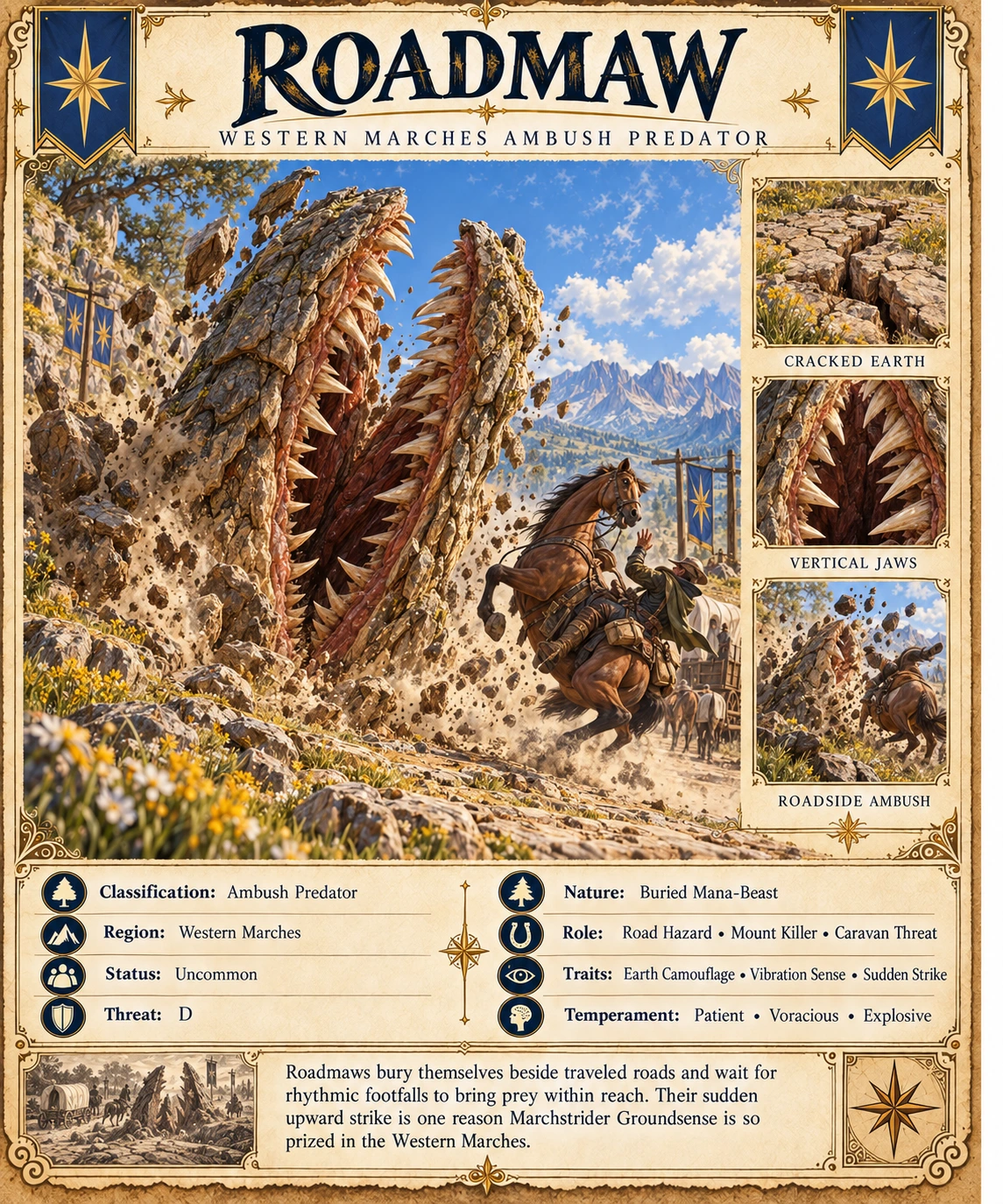
Roadmaw
Buried roadside ambush predator sensing rhythmic footfalls; especially detectable by Marchstrider Groundsense.
Encounter Threat D-class level threat
Buried roadside ambush predator sensing rhythmic footfalls; especially detectable by Marchstrider Groundsense.
Common Loot and reagents - Tremor Sac — Vibration-sensing organ; road alarms, mining sensors, trap triggers, perimeter wards, structural inspection tools. - Rootfang — Dense earth-mana teeth; stone-cutting tools, drill tips, reinforced picks, grounding charms, stability mixtures. - Roadplate — Tough jaw/facial plating; boot reinforcement, wagon undercarriage guards, shields, roadworker armor.
Wild or unbound members of this lineage are lethally hostile to people on meaningful detection. Established bonded, domesticated, Companioner-trained or canonically socialized individuals are exceptions. Ecology and intelligence do not erase the wild baseline.
Tracking Info
The clearest sign is not a footprint but a false patch of road: cracked earth with subtly radial fractures, unnaturally compacted edges, and small stones arranged by repeated underground movement. Nearby burrowers often vacate first. Tremor-sensing animals become reluctant to cross the patch.
Deeper Ethology
Roadmaws are patient vibration hunters. They settle where repeated footfall patterns promise traffic and learn the cadence of common wagons, herds, and patrols. They do not spring at every vibration; they wait for weight, rhythm, and distance to align. After a failed strike they may relocate several body lengths and rebury rather than immediately attack again. Heavy irregular stomping can confuse a young animal; old Roadmaws learn to ignore common decoy rhythms. A Roadmaw surfacing far from roads usually signals displacement, breeding movement, flooding, or pressure from something larger. Wild, unbound Mana Beasts are lethally hostile to people upon meaningful detection. Ambush, flanking, pursuit and attack timing follow the species’ established senses and tactics. Early warning and staying beyond detection can prevent contact; once detected, survival requires force, earned deterrence, specialized established abilities or escape. Ordinary distraction or handling does not make the creature safe.
When This Is Wrong
A break from these patterns is a reason to investigate. Injury, hunger, breeding, severe weather, migration, displacement, disease, mana instability or learned responses to people can change behavior. Observe the context before deciding what the sign means.
Connected world
Follow the relationships
Each connection opens the matching canonical record or a focused Codex search when that subject does not yet have its own public record.
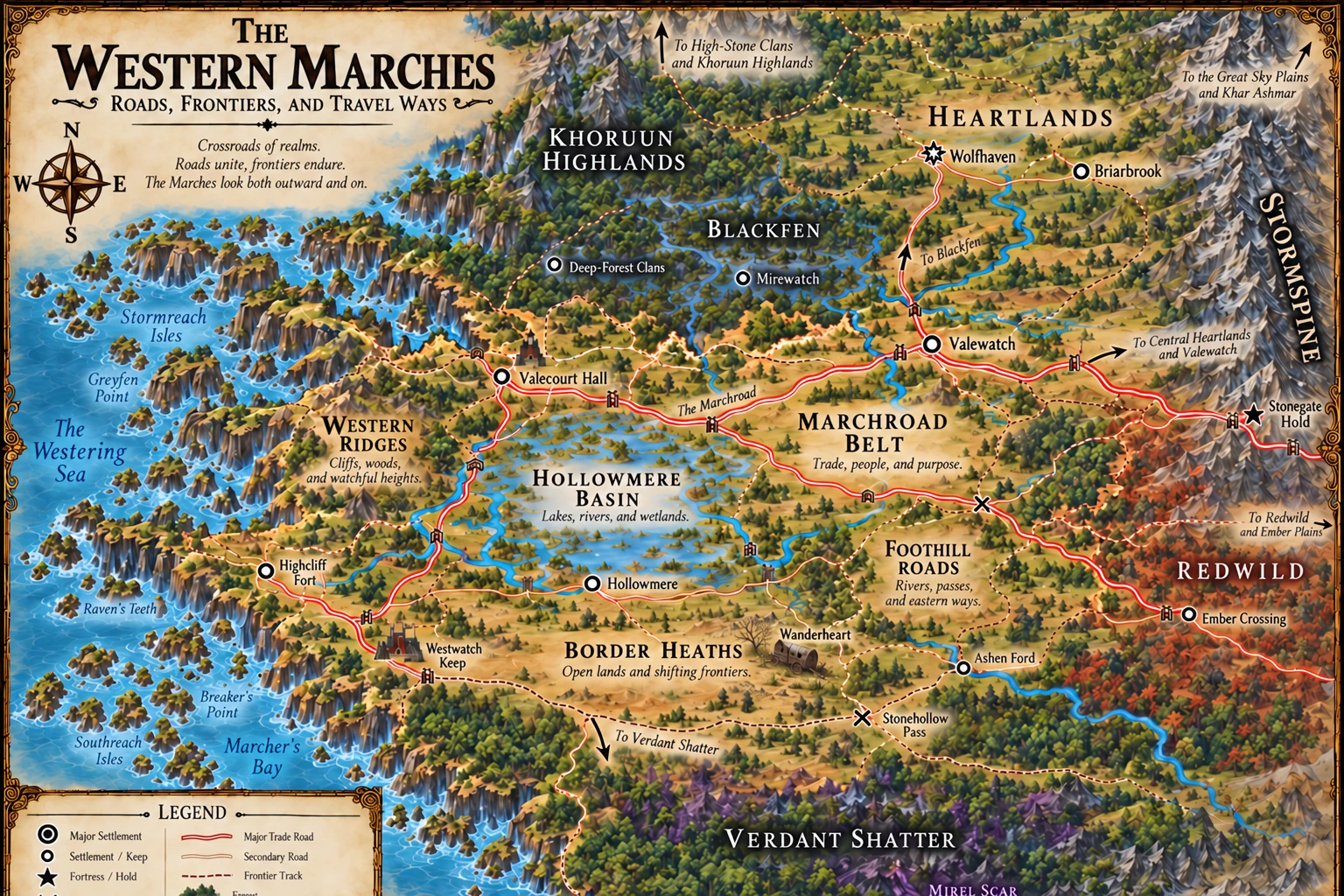 Heartlands subregion
Western Marches
The Heartlands’ western road-and-rider frontier: green-gold heaths, wooded ridges, living wagons, fortified crossings and service houses.
Open record →World RuleMana Beasts
Natural creatures with innate magical biology: an ecological classification, not a power tier.
Open record →