
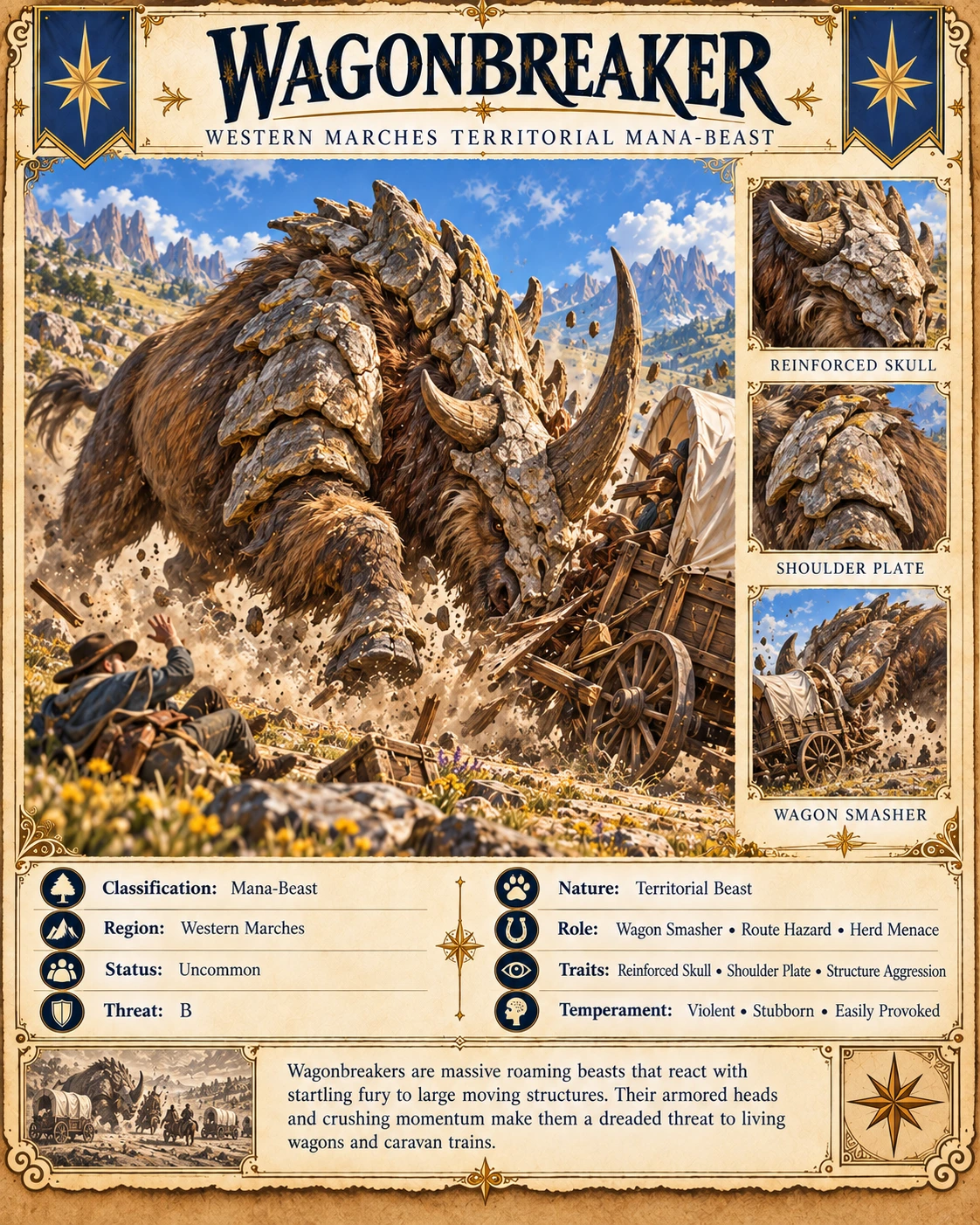
Wagonbreaker
Massive territorial Mana Beast with reinforced skull/shoulder plate; reacts violently to large moving structures, including living wagons.
Encounter Threat B-class level threat
Massive territorial Mana Beast with reinforced skull/shoulder plate; reacts violently to large moving structures, including living wagons.
Common Loot and reagents - Breaker Plate — Reinforced skull/shoulder armor; heavy shields, wagon armor, gates, barricades, impact-resistant gear. - Momentum Gland — Impact-dispersing organ; shock absorbers, reinforced axles, protective enchantments, high-end carriage suspension. - Breaker Sinew — Heavy connective tissue; wagon suspension, siege cords, heavy bows, lifting rigs, industrial equipment.
Wild or unbound members of this lineage are lethally hostile to people on meaningful detection. Established bonded, domesticated, Companioner-trained or canonically socialized individuals are exceptions. Ecology and intelligence do not erase the wild baseline.
Tracking Info
Bark, signposts, and fence rails show broad impact scars at shoulder height. Trails end in churned soil where the animal turned to meet large moving objects. Broken wagon fragments may be scattered laterally rather than eaten or carried.
Deeper Ethology
Wagonbreakers are territorial Mana Beasts, not carnivores. Large moving silhouettes, especially wagons, trigger challenge behavior. They posture broadside, scrape, then commit to a skull-and-shoulder impact. Wild animals remain lethally hostile to detected people regardless of cart size. Smashing an empty wagon does not satisfy their aggression or allow a nearby camp to depart safely. During breeding or resource stress the trigger threshold drops sharply. Their violence is about displacement and dominance, not feeding. Wild, unbound Mana Beasts are lethally hostile to people upon meaningful detection. Ambush, flanking, pursuit and attack timing follow the species’ established senses and tactics. Early warning and staying beyond detection can prevent contact; once detected, survival requires force, earned deterrence, specialized established abilities or escape. Ordinary distraction or handling does not make the creature safe.
When This Is Wrong
A break from these patterns is a reason to investigate. Injury, hunger, breeding, severe weather, migration, displacement, disease, mana instability or learned responses to people can change behavior. Observe the context before deciding what the sign means.
Connected world
Follow the relationships
Each connection opens the matching canonical record or a focused Codex search when that subject does not yet have its own public record.
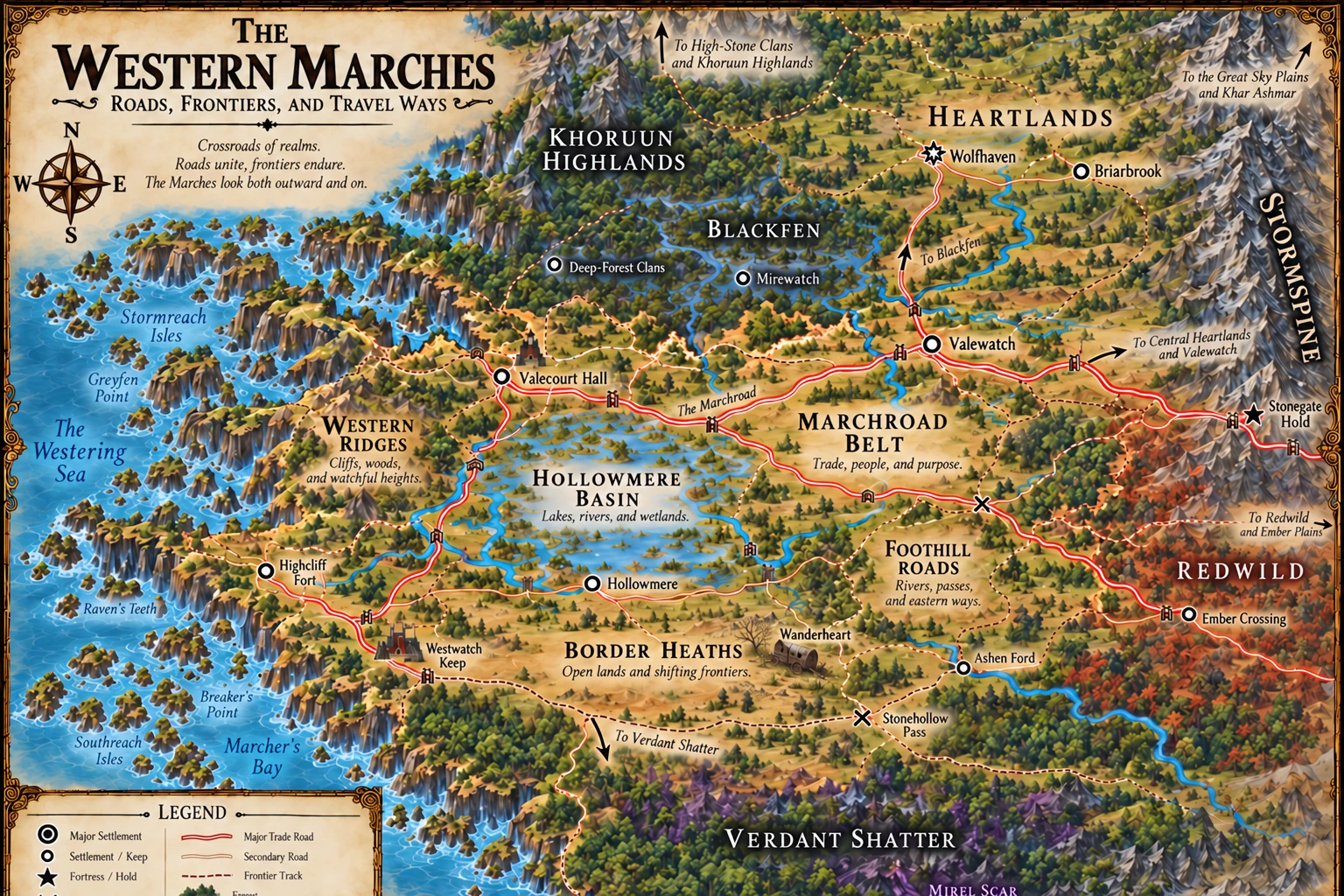 Heartlands subregion
Western Marches
The Heartlands’ western road-and-rider frontier: green-gold heaths, wooded ridges, living wagons, fortified crossings and service houses.
Open record →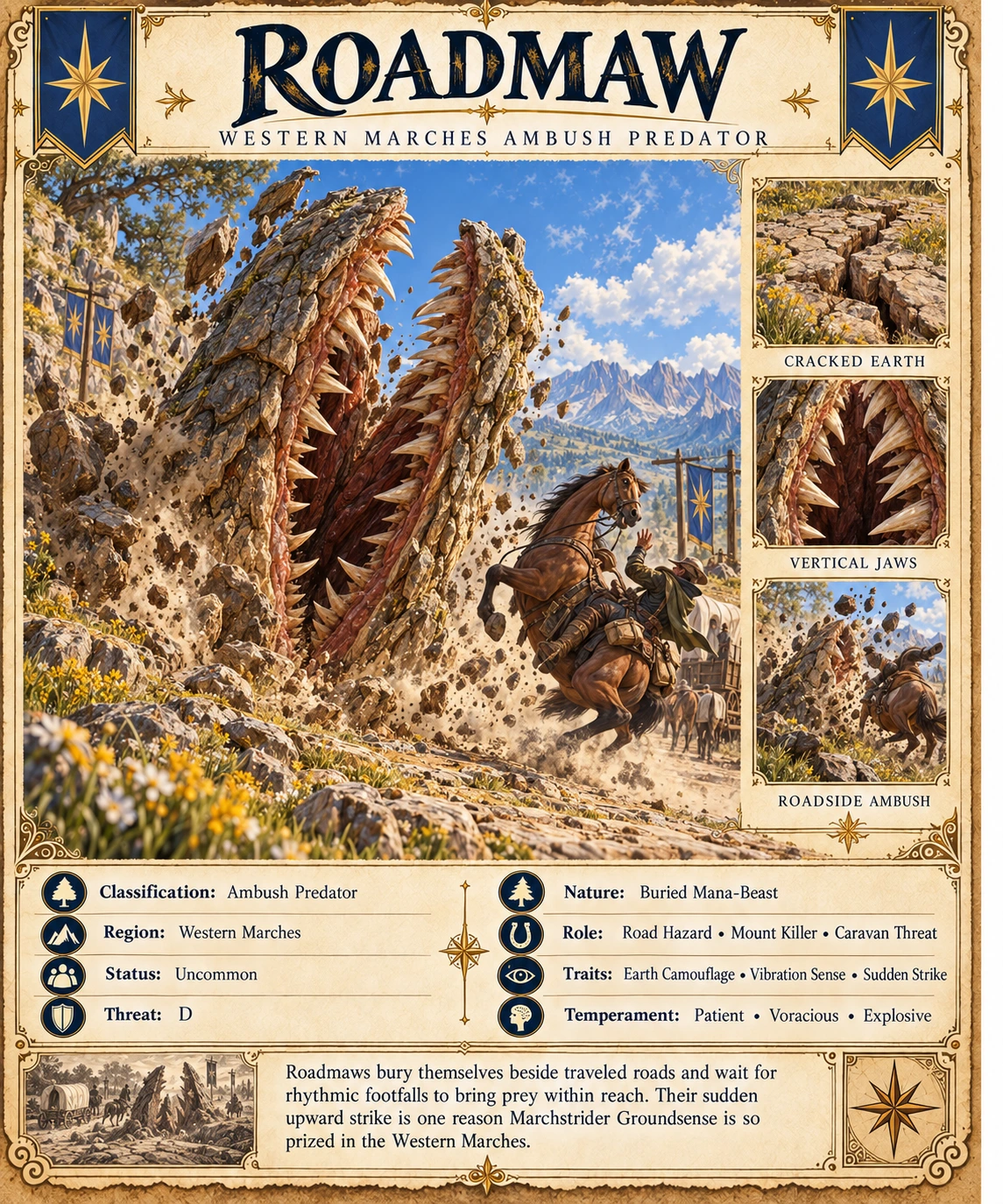 World Rule
Mana Beasts
Natural creatures with innate magical biology: an ecological classification, not a power tier.
Open record →